Fracture Treatment: Types of Bone Fractures, Diagnosis and Recovery
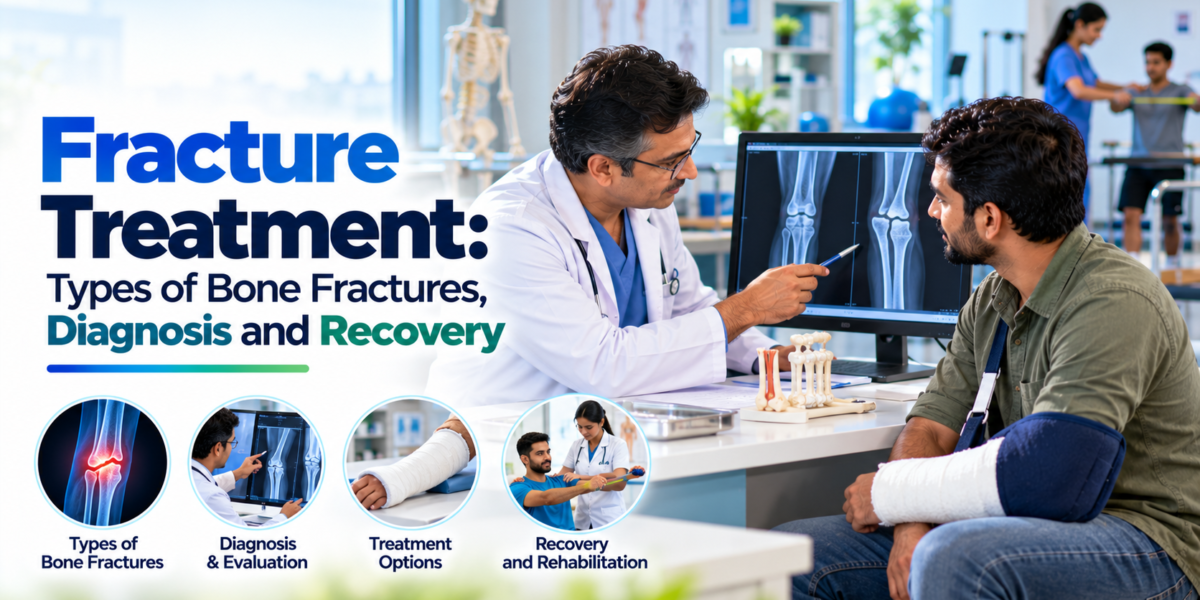
A bone fracture can happen after a road accident, a fall, a sports injury, or even repetitive physical activity. Understanding fracture treatment helps patients and caregivers make informed decisions about medical care, healing, and rehabilitation. While some fractures heal with a cast or brace, others may require surgery to restore the bone’s alignment and stability.
At Aneja Hospitals, patients can explore orthopedic care and diagnostic services for bone and joint conditions. If you suspect a fracture, timely medical evaluation is important to determine the severity of the injury and the most appropriate treatment plan.
This guide explains the different types of bone fractures, how doctors diagnose them, available fracture treatment options, expected recovery times, and practical steps to support healing.
What Is a Bone Fracture?
A bone fracture is a partial or complete break in a bone. It occurs when a force exceeds the bone’s ability to withstand it. Fractures can affect almost any bone in the body, including the wrist, arm, ankle, foot, ribs, hip, and leg.
Common causes include:
- Road traffic accidents and other traumatic injuries.
- Falls at home, at work, or during sports.
- Repetitive stress from running or other high-impact activities.
- Weakened bones due to osteoporosis or certain medical conditions.
- Minor injuries in people with reduced bone strength.
The severity of a fracture depends on the bone involved, the fracture pattern, the position of the broken fragments, and whether surrounding tissues are damaged.
Types of Bone Fractures
Doctors classify fractures according to the pattern of the break, whether the bone remains aligned, and whether the skin is damaged. Identifying the type of fracture helps determine the most appropriate treatment.
1. Closed Fracture
A closed fracture occurs when the bone breaks without an associated break in the skin over the injury. Although the skin remains intact, the injury may still involve significant swelling, internal bleeding, or damage to surrounding tissues.
Treatment may involve a splint, cast, brace, or surgery, depending on the fracture’s stability and alignment.
2. Open Fracture
An open fracture, also called a compound fracture, occurs when a wound communicates with the broken bone. The bone does not necessarily have to protrude through the skin.
These injuries carry a higher risk of infection and require emergency medical attention. Treatment often includes wound cleaning, antibiotics, stabilization of the bone, and surgery when indicated.
3. Displaced and Non-Displaced Fractures
A displaced fracture occurs when the broken bone fragments move out of their normal alignment. A non-displaced fracture retains relatively normal alignment despite the break.
Some non-displaced fractures can be treated with immobilization. Displaced fractures may require a procedure called reduction, in which the bone fragments are repositioned. Surgery may be necessary if the fracture is unstable or cannot be adequately aligned without an operation.
4. Transverse Fracture
A transverse fracture runs approximately straight across the bone. It can occur after a direct blow or another force that causes the bone to break across its width.
The treatment depends on the location, stability, and displacement of the fracture.
5. Oblique Fracture
An oblique fracture runs diagonally across the bone. Depending on the fracture pattern, the fragments may be more likely to shift, making careful assessment and follow-up important.
6. Spiral Fracture
A spiral fracture wraps around the bone and is often associated with a twisting force. These fractures can occur during sports, falls, or other injuries involving rotation.
Treatment depends on the affected bone, the patient’s age, and whether the fracture remains stable.
7. Comminuted Fracture
A comminuted fracture occurs when a bone breaks into three or more fragments. These fractures may result from high-impact trauma and can be more complex to treat.
Some patients require surgical fixation using plates, screws, rods, or external fixation devices.
8. Greenstick Fracture
A greenstick fracture is an incomplete break in which a bone bends and cracks rather than breaking completely. It is more common in children because their bones are more flexible than adult bones.
Depending on the injury, treatment may involve a splint or cast and follow-up imaging.
9. Stress Fracture
A stress fracture is a small crack in a bone caused by repetitive loading or overuse. It commonly affects the foot or lower leg in runners, athletes, and people who suddenly increase their activity levels.
Treatment usually involves modifying activity, reducing weight-bearing when necessary, and gradually returning to exercise under medical guidance.
10. Pathological Fracture
A pathological fracture occurs when a bone weakened by an underlying condition breaks under relatively little force. Osteoporosis, certain bone disorders, and some cancers can increase fracture risk.
Treatment may require both fracture stabilization and evaluation of the underlying cause.
What Are the Common Symptoms of a Fracture?
Fracture symptoms vary according to the bone involved and the severity of the injury. Common warning signs include:
- Sudden pain after an injury.
- Swelling and bruising around the affected area.
- Tenderness when the area is touched.
- Difficulty moving the injured limb or bearing weight.
- Visible deformity or an unusual angle in the limb.
- Reduced function or inability to use the affected body part.
Not every fracture causes an obvious deformity. Some small fractures may initially resemble a sprain or soft-tissue injury.
Seek emergency medical care if a bone may be broken, particularly if there is an open wound, severe deformity, uncontrolled bleeding, numbness, or a pale, blue, or cold hand or foot. Do not attempt to straighten the bone or push exposed bone back into the wound.
How Are Bone Fractures Diagnosed?
Accurate diagnosis is essential for choosing the right fracture treatment. An orthopedic doctor evaluates the injury, examines the affected area, and may recommend imaging tests.
Medical History and Physical Examination
The doctor asks how the injury occurred, when the symptoms began, and whether the patient has any relevant medical conditions. The examination may assess tenderness, swelling, deformity, movement, circulation, and nerve function.
The doctor also considers whether other injuries may be present.
X-Ray
X-rays are commonly the first imaging test used to identify a fracture. They can help show the location of the break, the fracture pattern, and whether the bone fragments are displaced.
CT Scan
A computed tomography (CT) scan produces detailed cross-sectional images. It may be recommended for complex fractures, fractures involving joints, or injuries that require more detailed surgical planning.
MRI Scan
Magnetic resonance imaging (MRI) may help identify certain fractures that are not visible on initial X-rays, including some stress fractures and occult fractures. It can also help assess associated soft-tissue injuries.
The choice of imaging depends on the suspected injury and the findings from the initial examination.
What Are the Different Fracture Treatment Options?
The goal of fracture treatment is to achieve appropriate bone alignment, maintain stability while healing occurs, manage pain, and restore function as safely as possible.
Not every fracture requires surgery. The treatment plan depends on the type of fracture, its location, the degree of displacement, damage to surrounding tissues, and the patient’s overall health.
1. Splinting and Casting
Splints and casts limit movement so that the bone can heal in the correct position.
- Splints: Often used initially when swelling is expected or temporary stabilization is needed.
- Casts: Provide more complete immobilization for selected fractures.
- Braces: Allow controlled movement in some injuries while supporting the healing bone.
Patients should follow instructions about keeping the cast dry, monitoring swelling, and attending scheduled reviews.
2. Closed Reduction
Closed reduction is a procedure in which a doctor repositions displaced bone fragments without making a surgical incision. Pain relief, sedation, or anesthesia may be used as appropriate.
After reduction, the bone is usually stabilized with a cast or splint, and follow-up imaging may be needed to confirm that alignment is maintained.
3. Fracture Surgery
Surgery may be recommended when the fracture is unstable, significantly displaced, involves certain joints, damages surrounding structures, or cannot be adequately treated with non-surgical methods.
Common procedures include:
- Open reduction and internal fixation (ORIF): The surgeon realigns the bone and secures it using plates, screws, rods, or other implants.
- Intramedullary nailing: A metal rod is inserted into the central canal of a long bone to stabilize selected fractures.
- External fixation: Pins or wires connected to an external frame help stabilize the bone. This may be useful for complex fractures or when surrounding soft tissues are severely injured.
- Joint replacement: In selected fractures involving a severely damaged joint, replacement surgery may be considered.
The need for surgery is determined individually. It is not automatically required for every displaced or complex fracture.
4. Medication and Pain Management
Doctors may recommend appropriate pain-relieving medication based on the injury and the patient’s medical history. Patients should follow the prescribed dosage and seek advice before combining medicines or using them for extended periods.
Antibiotics may be required for open fractures because of the risk of infection. They are not routinely needed for every closed fracture.
5. Physiotherapy and Rehabilitation
Rehabilitation helps restore strength, flexibility, balance, and movement after a fracture. Depending on the injury, a physiotherapist may recommend exercises for nearby joints, muscle strengthening, gait training, and a gradual return to daily activities.
Rehabilitation should begin at the stage recommended by the treating clinician. Putting weight on a healing fracture or starting strenuous exercise too early may interfere with recovery.
How Long Does a Bone Fracture Take to Heal?
Bone fracture recovery time varies widely. Some smaller fractures heal within several weeks, while major fractures may take several months or longer. The time needed to regain full strength and function may exceed the time required for the bone itself to unite.
| Fracture or recovery factor | General expectation |
|---|---|
| Some finger fractures | Around 3–4 weeks for bone healing |
| Many uncomplicated fractures | Around 6–8 weeks, sometimes longer |
| Complex or major fractures | Several months or longer |
| Return to sports or strenuous activity | Often later than initial bone healing |
These are broad examples, not personal predictions. Healing depends on the affected bone, fracture severity, age, blood supply, overall health, and whether complications occur.
What Factors Affect Fracture Recovery Time?
Several factors can influence how quickly a fracture heals:
- Age: Children often heal faster than adults, although individual outcomes vary.
- Fracture location and severity: Some bones and fracture patterns take longer to heal.
- Bone alignment and stability: Appropriate positioning and stabilization support healing.
- Nutrition: Adequate protein, calcium, vitamin D, and overall nutrition help maintain bone health.
- Medical conditions: Diabetes, osteoporosis, and certain other conditions may affect healing.
- Smoking: Smoking can interfere with bone healing.
- Following medical advice: Attending follow-up appointments and observing activity restrictions helps reduce avoidable complications.
Pain may improve before the bone is strong enough for unrestricted activity. Do not use pain reduction alone as proof that the fracture has healed.
How Can You Support Bone Fracture Recovery at Home?
Home care is an important part of recovery, but it must follow the instructions provided by the treating doctor.
Protect the Injured Area
Use the prescribed cast, splint, brace, sling, or walking aid as directed. Avoid lifting, walking, or exercising beyond the limits recommended by your clinician.
Manage Swelling
If advised, elevate the injured limb and use a cold pack wrapped in a cloth near the injured area without wetting the cast or placing ice directly against the skin.
Seek prompt medical attention if swelling or pain becomes severe, the fingers or toes become numb or discoloured, or the cast feels excessively tight.
Eat a Balanced Diet
Include protein-rich foods and sources of calcium, such as milk, curd, paneer, fortified foods, and suitable alternatives. Vitamin D supports calcium absorption. A clinician may recommend supplements if dietary intake or test results indicate a need.
Supplements do not replace fracture stabilization or appropriate medical treatment.
Attend Follow-Up Appointments
Follow-up visits allow the doctor to assess healing, check alignment, review symptoms, and determine when movement or weight-bearing can safely increase.
Do not remove a cast yourself or stop using a prescribed support without medical advice.
Follow Your Rehabilitation Plan
Perform only the exercises approved for your injury and stage of healing. A gradual, supervised return to normal activities can help restore strength and reduce stiffness.
What Are the Possible Complications of a Bone Fracture?
Although many fractures heal successfully, complications can occur. These include:
- Infection, particularly with open fractures or after certain operations.
- Delayed union, when healing takes longer than expected.
- Nonunion, when the bone fails to heal adequately.
- Malunion, when the bone heals in an unsatisfactory position.
- Joint stiffness and muscle weakness.
- Injury to nearby nerves or blood vessels.
- Blood clots in certain patients, particularly after major lower-limb injuries or surgery.
Increasing pain, new numbness, fever, wound drainage, or a cold or discoloured limb requires prompt medical assessment. Sudden breathlessness or chest pain after an injury or surgery is an emergency.
When Should You Consult an Orthopedic Doctor?
You should seek medical evaluation after an injury if you have persistent pain, substantial swelling, difficulty using the affected limb, or difficulty bearing weight.
Emergency assessment is particularly important for open fractures, severe deformity, uncontrolled bleeding, suspected hip fractures, and signs of impaired circulation.
Early evaluation can help identify the fracture, determine whether the bone is stable, and establish an appropriate treatment and follow-up plan.
Looking for Orthopedic Care at Aneja Hospitals?
If you suspect a fracture or need an assessment of a known bone injury, consult an orthopedic specialist for an individualized evaluation.
Aneja Hospitals provides orthopedic care and lists diagnostic services including X-rays, CT scans, and MRI. The appropriate investigations and treatment depend on the patient’s condition.
Book an orthopedic consultation: Visit Aneja Hospitals or explore the hospital’s treatments and specialties to learn more about available services.
If you have a suspected serious fracture or emergency warning signs, seek urgent medical care rather than waiting for a routine appointment.
Frequently Asked Questions About Fracture Treatment
What is the best treatment for a bone fracture?
The best treatment depends on the type, location, stability, and severity of the fracture. Some fractures heal with a splint or cast, while others require reduction or surgery. An orthopedic evaluation helps determine the appropriate approach.
Can a bone fracture heal without surgery?
Yes. Many stable fractures can heal without surgery when the bone is properly aligned and protected. However, some fractures require an operation to restore alignment or provide sufficient stability.
How long does fracture treatment take?
Initial treatment may occur on the day of injury, but healing often takes several weeks or months. Rehabilitation and return to strenuous activity may take longer. The exact timeline depends on the fracture and individual healing factors.
How do doctors diagnose a fracture?
Doctors assess the injury, examine the affected area, and usually request an X-ray. CT or MRI scans may be needed for complex fractures or when an injury is not clearly visible on initial X-rays.
What are the signs of a serious fracture?
Severe pain, obvious deformity, an open wound, uncontrolled bleeding, numbness, or a pale, blue, or cold limb can indicate a serious injury. Seek emergency medical care if these signs occur.
What foods help bones heal after a fracture?
A balanced diet containing adequate protein, calcium, vitamin D, and other essential nutrients supports bone health. Dairy products, pulses, beans, eggs, fish, and suitable fortified foods can contribute, depending on dietary preferences and medical needs.
When can I walk after a leg fracture?
This depends on the bone involved, fracture stability, treatment, and follow-up findings. Some patients can bear weight early with support, while others must avoid weight-bearing for a period. Follow the treating doctor’s instructions.
Is physiotherapy necessary after a fracture?
Physiotherapy is often useful for restoring movement, strength, balance, and function. The timing and exercises depend on the fracture and treatment plan.
Can a fracture heal incorrectly?
Yes. A fracture can heal in an unsatisfactory position, take longer than expected to unite, or fail to unite. Follow-up examinations and imaging help clinicians monitor healing and identify problems.
When should I book an orthopedic consultation?
Seek an assessment if you suspect a fracture, have persistent pain after an injury, or need guidance about an existing fracture. Open wounds, severe deformity, impaired circulation, or other emergency symptoms require immediate medical care.
Conclusion
Effective fracture treatment involves accurate diagnosis, appropriate stabilization, monitoring, and rehabilitation. Some fractures heal with a cast or brace, while others need surgery. Recovery times differ according to the injury and the patient’s overall health, so an individualized medical plan is essential.
If you suspect a broken bone, do not rely on symptoms alone to judge its severity. Timely assessment by an orthopedic professional can help guide treatment and support a safer return to everyday activities.
For orthopedic evaluation and information about available services, visit Aneja Hospitals.
Medical disclaimer: This article is for general educational purposes and does not replace professional medical assessment, diagnosis, or treatment.