Knee Pain Relief: Common Causes, Symptoms and When to See an Orthopedic Doctor
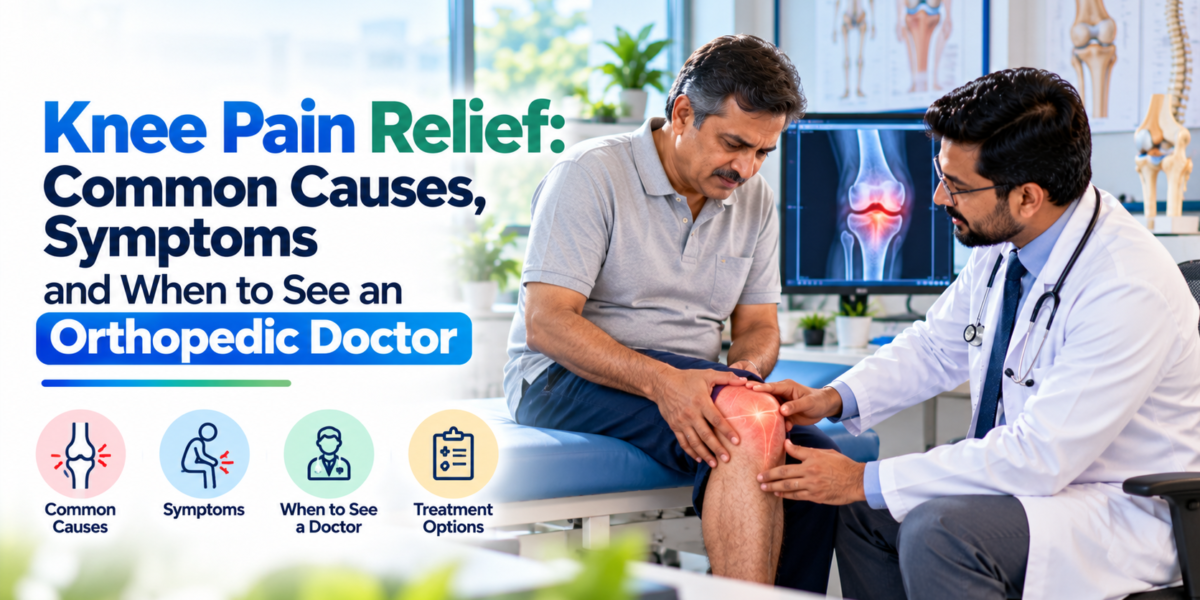
Knee pain can make everyday activities such as walking, climbing stairs, exercising, or getting up from a chair uncomfortable. Whether it develops gradually with age or starts after an injury, finding effective knee pain relief begins with understanding the underlying cause.
Knee pain can affect children, young adults, athletes, working professionals, and older adults. Common causes include osteoarthritis, ligament injuries, meniscus tears, tendon problems, overuse, and inflammatory joint conditions. While some mild cases improve with appropriate self-care, persistent or severe symptoms may require medical evaluation.
For people looking for knee pain treatment in Sonipat and nearby areas, understanding the warning signs can help them decide when to consult an orthopedic doctor. Aneja Hospitals in Sector 14, Sonipat, lists orthopedic care among its services.
This guide explains common knee pain causes, symptoms to watch for, treatment options, safe home-care measures, and when to seek medical attention.
What Is Knee Pain?
Knee pain refers to discomfort in or around the knee joint. The knee connects the thighbone to the shinbone and includes cartilage, ligaments, tendons, muscles, and other structures that support movement and stability.
Pain may develop suddenly after a fall, sports injury, or twisting movement. It can also appear gradually because of repetitive strain, age-related joint changes, or an underlying medical condition.
Depending on the cause, knee pain may be felt at the front, back, inner side, outer side, or throughout the joint. Some people experience swelling or stiffness, while others notice instability or difficulty bending and straightening the leg.
Understanding the location, duration, and severity of the pain helps a healthcare professional assess its possible cause.
What Are the Common Causes of Knee Pain?
The most suitable approach to knee pain relief depends on the condition causing the symptoms. Several problems can affect the knee joint and surrounding tissues.
1. Osteoarthritis
Osteoarthritis is a common cause of knee pain, particularly among older adults. It involves changes in the joint’s cartilage and other tissues, which may lead to pain, stiffness, swelling, and reduced mobility.
People with knee osteoarthritis may experience discomfort while walking, climbing stairs, standing for long periods, or rising after sitting. Stiffness after rest is also common.
Treatment may include therapeutic exercise, physiotherapy, weight management where appropriate, and medication recommended by a healthcare professional. Some patients with advanced disease may be considered for knee replacement surgery.
2. Ligament Injuries
Ligaments help keep the knee stable. Sudden changes in direction, falls, sports injuries, and accidents can damage these structures.
A ligament injury may cause sudden pain, swelling, difficulty walking, or a feeling that the knee is giving way. Some injuries are mild, while others require specialist assessment and structured rehabilitation.
Seek prompt medical evaluation if pain follows a significant injury, especially when swelling develops quickly or walking becomes difficult.
3. Meniscus Tears
The menisci are cartilage structures that help distribute load and cushion the knee. A sudden twisting movement can injure a meniscus, while age-related changes can make it more vulnerable to damage.
Symptoms may include pain along the joint line, swelling, catching, or difficulty fully bending or straightening the knee.
Treatment depends on the nature of the tear, symptoms, activity level, and examination findings. Physiotherapy and activity modification may be sufficient in some cases, while selected injuries may require surgery.
4. Tendon Problems and Overuse
Repeated running, jumping, squatting, or other strenuous activities can irritate the tendons around the knee. This may cause pain during exercise or when placing pressure on the affected area.
Overuse-related pain may improve when aggravating activities are temporarily reduced. However, recurring symptoms should not be ignored, particularly if they interfere with walking or exercise.
A clinician or physiotherapist can help identify the problem and recommend an appropriate return-to-activity plan.
5. Bursitis and Inflammation
Bursae are small fluid-filled sacs that reduce friction around joints. Irritation of these structures can cause pain and swelling around the knee.
Inflammatory arthritis and other joint conditions can also cause stiffness, tenderness, and swelling. The symptoms may develop gradually or appear in episodes.
A warm, red, swollen knee with fever or feeling unwell requires urgent medical assessment because a joint infection is one possible cause.
6. Gout and Other Medical Conditions
Gout can cause sudden episodes of intense joint pain, warmth, redness, and swelling. Although it often affects the big toe, the knee can also be involved.
Other medical conditions may cause joint pain, so symptoms should not automatically be attributed to ageing or physical activity. A medical examination can help determine whether further tests are necessary.
What Are the Common Symptoms of Knee Pain?
Recognizing associated symptoms can help you understand when professional assessment may be appropriate.
Common symptoms include:
- Pain while walking, standing, or climbing stairs.
- Stiffness after waking up or sitting for a long time.
- Swelling around the knee.
- Tenderness when touching the joint.
- Difficulty bending or straightening the leg.
- A feeling of weakness or instability.
- Clicking, catching, or locking sensations.
- Reduced ability to participate in everyday activities.
Painless clicking can be normal. However, painful clicking, locking, repeated giving way, or symptoms following an injury should be assessed.
Symptoms alone cannot confirm a diagnosis. The cause of knee pain depends on the medical history, physical examination, and any investigations that may be needed.
When Should You See an Orthopedic Doctor for Knee Pain?
You should consider an orthopedic consultation if your knee pain persists, keeps returning, or interferes with daily activities.
Arrange a medical appointment if you notice:
- Pain that is not improving with reasonable self-care.
- Swelling that persists or repeatedly returns.
- Increasing stiffness or difficulty moving the knee.
- Pain that affects walking, sleep, work, or exercise.
- Repeated episodes of the knee giving way.
- Pain after a sports injury, fall, or twisting movement.
- Symptoms that are getting progressively worse.
Which Knee Pain Symptoms Require Urgent Medical Attention?
Seek urgent medical care if you experience:
- Severe pain after a fall, accident, or significant injury.
- Inability to walk or put weight on the affected leg.
- A severely swollen or visibly deformed knee.
- A knee that locks and cannot be straightened.
- A hot, red, swollen knee accompanied by fever or feeling unwell.
- New numbness or loss of sensation after an injury.
Do not wait for a routine orthopedic appointment if you have these warning signs. A hot, swollen joint with fever may indicate an infection that requires rapid treatment.
How Can You Get Knee Pain Relief at Home?
For mild knee discomfort without a serious injury or warning signs, a few measures may help ease symptoms while the knee recovers.
Rest From Activities That Worsen Pain
Temporarily reduce activities that place excessive strain on the knee, such as running, jumping, deep squats, or prolonged standing.
Relative rest is generally preferable to prolonged complete inactivity. Gentle movement may help maintain mobility when it is comfortable and medically appropriate.
Apply a Cold Pack
A cold pack wrapped in a towel may help relieve pain and swelling. Apply it for up to 20 minutes at a time, with breaks between applications.
Never apply ice directly to the skin. Stop if the skin becomes unusually painful, numb, or irritated.
Elevate the Leg
If the knee is swollen, resting with the leg supported may help with comfort. Elevation is a supportive measure, not a substitute for assessment when swelling is severe or unexplained.
Maintain Appropriate Movement
When serious injury has been ruled out, gentle movement and a gradual return to normal activities can help prevent stiffness. Avoid forcing painful movements or exercising through significant pain.
If symptoms worsen during activity, reduce the intensity and seek professional guidance if the problem persists.
Ask Before Using Pain Medication
Some medicines can help relieve knee pain, but the safest choice depends on your health, medical history, and other medicines.
Ask a doctor or pharmacist which option is suitable. Anti-inflammatory medicines can have risks, particularly for people with kidney disease, stomach ulcers, cardiovascular conditions, or those taking blood thinners.
Home remedies may help manage mild symptoms, but they cannot treat every cause of knee pain.
What Are the Treatment Options for Knee Pain?
There is no single treatment that works for every patient. Effective knee pain relief requires identifying the underlying problem and selecting treatment accordingly.
Physiotherapy and Rehabilitation
Physiotherapy may help improve strength, flexibility, balance, and knee movement. A tailored programme can also help patients return to everyday activities after selected injuries.
The exercises should match the diagnosis and the patient’s abilities. A physiotherapist can recommend suitable movements and explain how to progress safely.
Medication
A healthcare professional may recommend medication to manage pain or inflammation. The choice depends on the condition, the patient’s overall health, and potential side effects.
Medication can relieve symptoms but may not correct the underlying problem. Do not self-prescribe antibiotics, steroids, or prescription pain medicines.
Lifestyle Changes
For some people, appropriate lifestyle changes can support joint health and improve function.
These may include:
- Gradually increasing suitable physical activity.
- Choosing low-impact activities when appropriate.
- Strengthening the muscles around the knee.
- Managing body weight if advised.
- Modifying activities that repeatedly trigger pain.
For patients with knee osteoarthritis, exercise and weight management where appropriate are important parts of many treatment plans.
Injections and Specialist Procedures
Selected patients may be offered an injection or another specialist procedure after an assessment. The likely benefits, limitations, risks, and alternatives should be discussed before treatment.
These options are not suitable for everyone and should be chosen according to the diagnosis rather than pain alone.
Arthroscopic Surgery
Arthroscopy uses a small camera and instruments to examine or treat certain problems inside a joint. It may be useful for selected injuries or mechanical conditions.
It is not automatically necessary for every meniscus tear or case of knee osteoarthritis. The decision depends on the specific problem and available treatment alternatives.
Knee Replacement Surgery
Knee replacement may be considered for people with advanced joint disease whose pain and functional limitations remain substantial despite appropriate nonsurgical treatment.
An orthopedic specialist evaluates symptoms, examination findings, imaging where appropriate, general health, and personal goals before discussing surgery.
Not everyone with knee pain or arthritis needs a knee replacement.
How Is Knee Pain Diagnosed?
An orthopedic doctor usually begins by discussing your symptoms, medical history, daily activities, and any previous injuries.
The assessment may include:
- Medical history: Understanding when the pain started, what makes it worse, and whether there was an injury.
- Physical examination: Assessing tenderness, swelling, movement, stability, and walking ability.
- Imaging when needed: X-rays may help assess bone and joint changes. MRI or other imaging may be appropriate for selected injuries or conditions.
- Additional tests: Blood tests or joint-fluid analysis may be recommended if infection, gout, or inflammatory disease is suspected.
- Treatment planning: Discussing the diagnosis, treatment options, rehabilitation, and follow-up.
Not everyone needs an MRI or every available test. Investigations should be based on the clinical findings.
Where Can You Find Knee Pain Treatment in Sonipat?
If knee pain is affecting your daily routine, finding an appropriate orthopedic service can help you understand the cause and available treatment options.
Patients looking for an orthopedic doctor for knee pain in Sonipat may wish to consider factors such as specialist availability, diagnostic assessment, rehabilitation services, communication, and follow-up care.
Orthopedic Care at Aneja Hospitals
Aneja Hospitals, also known as Aneja Bhogal Multispeciality Hospital, lists orthopedic care, arthroscopic surgery, and hip, shoulder, and knee replacement among its services. Its website also lists physiotherapy.
The hospital’s published address is:
Aneja Bhogal Multispeciality Hospital
Opposite HUDA Commercial Centre, Sikka Colony, Sector 14, near Vivekanand Chowk, Delhi Road, Sonipat, Haryana 131001.
Website: https://anejahospitals.com
Phone: +91-9812591077
Alternate phone: +91-8901523993
If you live in Model Town, Sector 7, Sector 8, Sector 12, Sector 15, Sector 23, Sector 27, Patel Nagar, Sikka Colony, Rai, Kundli, Murthal, Ganaur, Kharkhoda, or another nearby area, you can contact the hospital to enquire about orthopedic consultation availability.
Please confirm the appropriate department, appointment availability, and suitability of any specific service directly with the hospital.
Take the next step: If your knee pain persists, swelling keeps returning, or movement becomes difficult, consider arranging a medical assessment. Visit Aneja Hospitals to learn about its services and contact options.
Frequently Asked Questions About Knee Pain Relief
What is the fastest way to get knee pain relief?
For mild discomfort without warning signs, temporarily reducing painful activities and applying a cold pack wrapped in a towel may help. The fastest appropriate treatment depends on the cause. Severe pain, significant swelling, or difficulty bearing weight needs medical assessment.
What causes knee pain without an injury?
Possible causes include osteoarthritis, inflammatory arthritis, gout, bursitis, and other joint conditions. Persistent or unexplained pain should be evaluated rather than assumed to be age-related.
When should I see an orthopedic doctor for knee pain?
Consult a doctor if pain persists, worsens, keeps returning, or interferes with daily activities. Seek urgent care for severe pain after an injury, inability to bear weight, a locked or deformed knee, or a hot swollen knee with fever.
Can knee pain be treated without surgery?
Yes. Depending on the diagnosis, treatment may include physiotherapy, suitable exercises, activity modification, medication, and lifestyle changes. Surgery is reserved for selected cases when it is clinically appropriate.
Why does my knee hurt when climbing stairs?
Pain while climbing stairs can occur with osteoarthritis, kneecap-related pain, tendon problems, or other conditions. The location and pattern of pain, along with an examination, help determine the cause.
What causes knee swelling?
Knee swelling may result from an injury, osteoarthritis, inflammation, gout, or infection. Sudden, severe, or unexplained swelling warrants medical assessment, especially when the knee is hot, red, or accompanied by fever.
Is walking good for knee pain?
Gentle walking may be helpful for some knee conditions, but it is not suitable in every situation. Avoid forcing activity when pain is severe, the knee is unstable, or an injury may have occurred. Ask a healthcare professional for advice if walking worsens your symptoms.
Where can I find knee pain treatment in Sonipat?
Aneja Hospitals in Sector 14, Sonipat, lists orthopedic services on its official website. Visit https://anejahospitals.com or contact the hospital directly to enquire about the appropriate consultation and current appointment availability.
Does every patient with knee pain need an MRI?
No. The need for imaging depends on the symptoms, examination, and suspected diagnosis. Some patients may need no imaging, while others may require an X-ray, MRI, or another investigation.
Conclusion
Knee pain can affect people at every stage of life, but the right treatment depends on understanding its cause. Recognizing common symptoms, using appropriate self-care, and seeking timely medical advice can help protect mobility and support recovery.
If you are looking for knee pain relief or knee pain treatment in Sonipat, consider an orthopedic consultation when symptoms persist, worsen, or interfere with everyday activities.
Visit Aneja Hospitals to explore its orthopedic services and enquire about an appointment. Your treatment plan should be based on an individual assessment and the diagnosis made by a qualified healthcare professional.
Medical disclaimer: This article is intended for general educational purposes and does not replace professional medical advice, diagnosis, or treatment. Seek urgent medical care for serious symptoms or injuries.