How Our Dermatology Department Treats Acne & Pigmentation (Expert Care in Sonipat)
Struggling with stubborn acne or dark spots that just won’t fade?
You’re not alone. Many young adults deal with recurring breakouts, acne scars, and uneven skin tone—but the real problem is not just the condition, it’s the lack of correct diagnosis and treatment.
In this guide, we explain how our dermatology department treats acne & pigmentation, what causes these issues, and why expert care makes all the difference.
🤔 Why Acne & Pigmentation Keep Coming Back
If you’ve tried multiple creams or home remedies but still see no improvement, here’s why:
- Acne is linked to hormones, oil production, and bacteria
- Pigmentation is caused by sun exposure, inflammation, or skin damage
- Incorrect skincare routines worsen both conditions
👉 This is why surface-level treatments don’t work long-term.
🚫 Acne & Pigmentation: Common Mistakes Patients Make
Before treatment, most patients unknowingly delay recovery.
❗ Common mistakes:
- Using random over-the-counter products
- Ignoring sunscreen
- Picking or squeezing acne
- Following social media remedies
👉 These habits worsen acne and lead to deeper pigmentation.
🏥 How Our Dermatology Department Treats Acne & Pigmentation
At Aneja Hospitals, treatment is not one-size-fits-all.
👉 “Aneja Hospitals offers expert dermatology care with personalized treatment plans to address common skin concerns and long-term skin health.”
Here’s how the process works:
🔬 1. Detailed Skin Analysis
Every treatment begins with understanding your skin.
- Skin type assessment
- Acne severity evaluation
- Pigmentation type identification
👉 This step ensures the treatment targets the root cause.
💊 2. Medical Treatment for Acne Control
Depending on your condition, treatment may include:
- Prescription medications
- Oil-control therapies
- Anti-inflammatory solutions
👉 The goal is to stop new acne formation.
✨ 3. Targeted Pigmentation Treatment
Pigmentation is treated based on its type:
- Post-acne marks
- Sun-induced pigmentation
- Uneven skin tone
Treatment options may include:
- Topical treatments
- Skin-brightening therapies
- Controlled exfoliation procedures
👉 This helps reduce dark spots safely and effectively.
⚙️ 4. Advanced Dermatology Procedures
For stubborn cases, advanced treatments are recommended:
- Chemical peels
- Laser-based treatments
- Acne scar management procedures
👉 These provide faster and more visible results.
🧴 5. Personalized Skincare Routine
Patients receive a customized routine including:
- Cleanser
- Treatment products
- Sunscreen
👉 This prevents recurrence and maintains results.
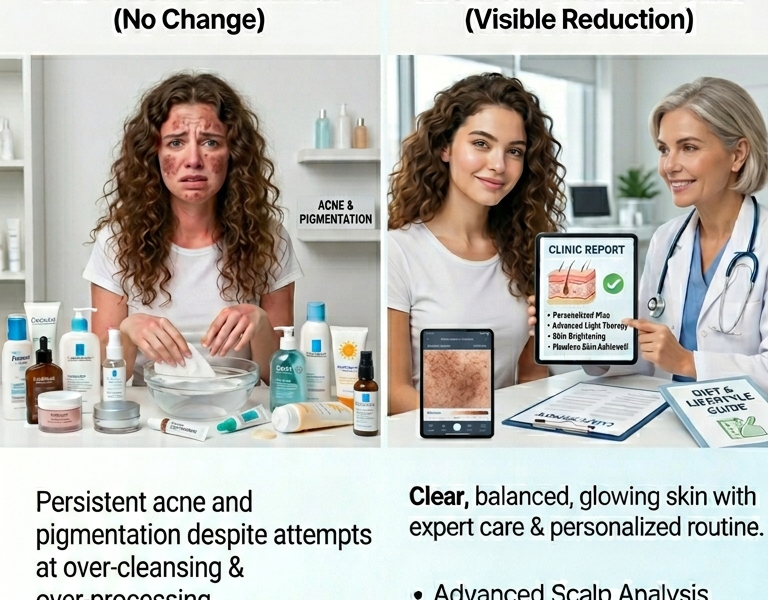
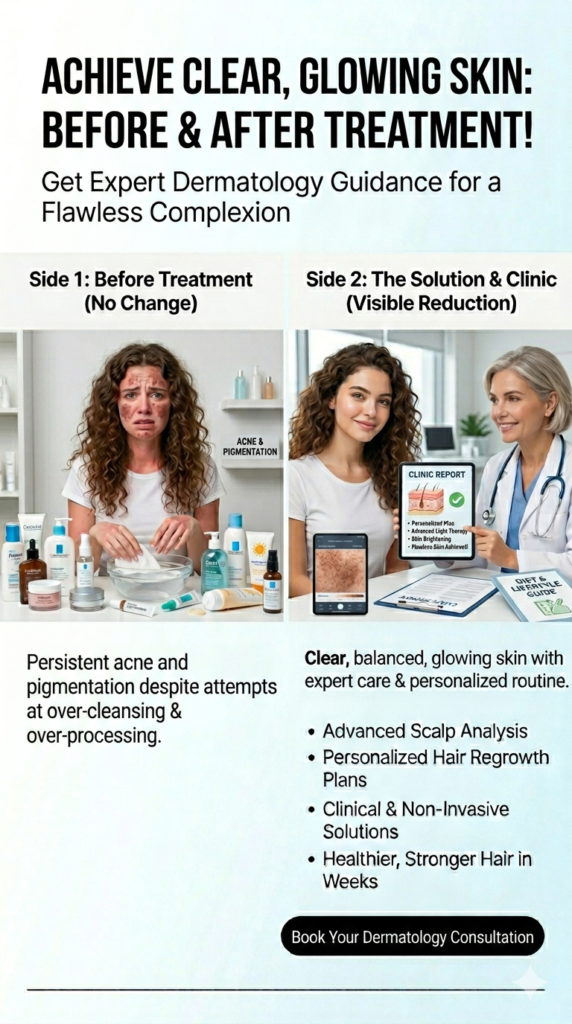
⚠️ Before: Why Treatments Often Fail
Many people don’t get results because:
- They self-treat without diagnosis
- They stop treatment midway
- They use incorrect products
👉 Acne and pigmentation require consistent and guided care.
💙 After: What Results You Can Expect
With proper treatment:
- Acne reduces significantly
- Breakouts are controlled
- Pigmentation fades gradually
- Skin becomes clearer and healthier
👉 Real results come from treating the root cause—not just symptoms.
🧠 When Should You See a Dermatologist?
You should consult a specialist if:
- Acne is persistent or painful
- You have acne scars or marks
- Pigmentation is spreading or darkening
- Home remedies aren’t working
👉 Early treatment prevents long-term skin damage.
🚨 Don’t Ignore Acne & Pigmentation
These are not just cosmetic issues—they affect your confidence and long-term skin health.
Understanding how our dermatology department treats acne & pigmentation helps you make the right decision at the right time.
👉 Book a consultation at Aneja Hospitals and get a personalized treatment plan for your skin.
❓ FAQs – Acne & Pigmentation Treatment
❓ Can acne and pigmentation be treated permanently?
They can be effectively controlled and significantly improved with proper treatment.
❓ How long does treatment take?
Results vary, but visible improvement usually starts within a few weeks.
❓ Are dermatology treatments safe?
Yes, when done under expert supervision.
❓ Can I treat acne at home?
Mild cases can be managed, but persistent acne requires medical care.
❓ Is sunscreen necessary during treatment?
Yes, it is essential to prevent worsening pigmentation.