Knee Pain Treatment Near Sector 15 Sonipat: Causes, Warning Signs and Treatment Options
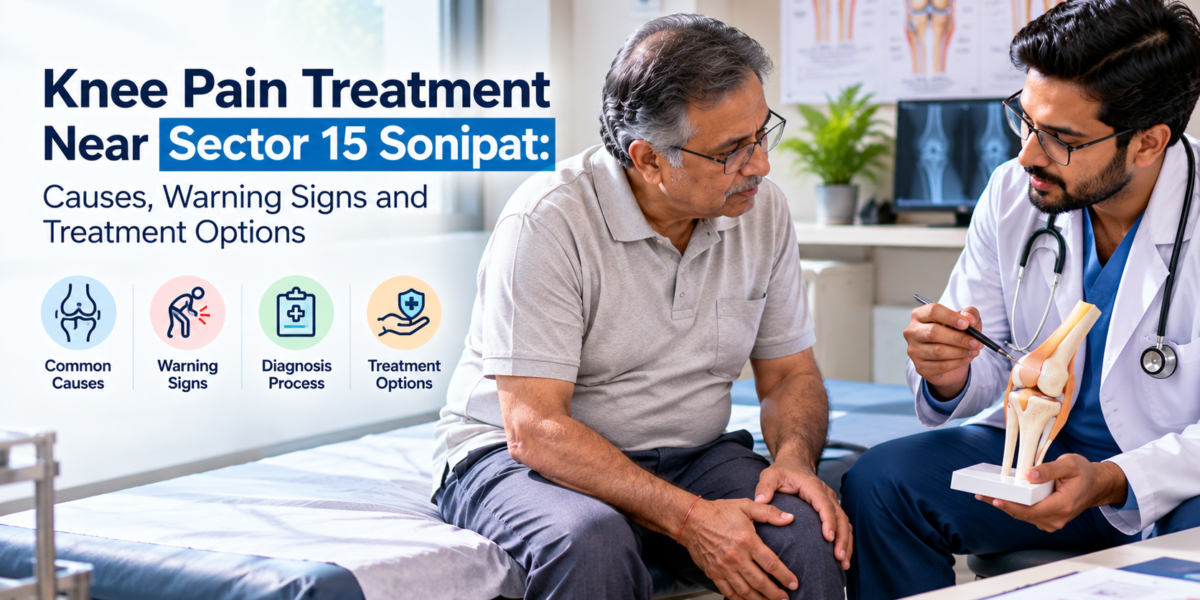
Knee pain can make everyday activities such as walking, climbing stairs, sitting cross-legged, or getting up from a chair uncomfortable. Whether the pain develops gradually with age or begins after an injury, finding the right Knee Pain Treatment in Sonipat starts with understanding its cause.
For residents looking for knee pain treatment near Sector 15, Sonipat, knowing when to seek medical attention can help prevent unnecessary discomfort and delays in diagnosis. Knee pain may result from osteoarthritis, ligament injuries, inflammation, overuse, or other joint conditions. The most appropriate treatment depends on the symptoms, medical history, physical examination, and, when necessary, diagnostic tests.
A timely orthopedic consultation can help identify the underlying problem and establish a suitable treatment plan. If you are experiencing persistent knee pain, stiffness, or swelling, visit Aneja Hospital’s official website to explore the hospital’s available services and contact options.
What Causes Knee Joint Pain?
The knee is a complex joint that connects the thighbone to the shinbone and includes cartilage, ligaments, tendons, muscles, and other supporting structures. Pain can originate in any of these tissues.
Understanding common knee joint pain causes can help you recognize when professional assessment may be necessary.
Osteoarthritis and Age-Related Joint Changes
Osteoarthritis occurs when the tissues within a joint undergo gradual changes, including the breakdown of cartilage. It can cause pain during movement, stiffness after rest, and difficulty walking or climbing stairs.
Symptoms may develop gradually and can become more noticeable with age. However, knee pain should not automatically be attributed to ageing; an appropriate assessment helps identify the likely cause.
Ligament and Meniscus Injuries
Sudden twisting movements, sports injuries, falls, or accidents can damage the ligaments or meniscus, a cartilage structure that helps cushion the knee.
Possible symptoms include:
- Sudden pain after an injury.
- Swelling that develops within hours or later.
- A feeling that the knee is unstable.
- Difficulty bending or straightening the leg.
- Catching or locking sensations.
Significant injuries require medical evaluation, particularly when weight-bearing becomes difficult.
Tendon Problems and Overuse
Repeated activities such as running, jumping, squatting, or prolonged kneeling can irritate the tendons and surrounding tissues.
Overuse-related knee pain may improve with activity modification, but persistent or recurring discomfort should be assessed rather than repeatedly ignored.
Inflammation and Other Joint Conditions
Inflammatory arthritis, gout, bursitis, and certain infections can also cause knee pain and swelling. Some conditions may produce warmth, redness, marked tenderness, or symptoms that appear suddenly.
A hot, red, swollen knee accompanied by fever or feeling unwell needs urgent medical assessment because joint infection is one possible cause.
What Are the Warning Signs of Knee Pain?
Not every episode of knee pain requires emergency care. However, certain symptoms should not be ignored. Recognizing these warning signs can help you decide whether to arrange a routine appointment or seek urgent medical attention.
When Should You See a Knee Pain Doctor in Sonipat?
Consider consulting a doctor if you experience:
- Knee pain that persists, returns frequently, or interferes with daily activities.
- Stiffness that makes it difficult to bend or straighten your knee.
- Swelling that does not improve or repeatedly returns.
- Pain while walking, climbing stairs, or standing up after sitting.
- A sensation that the knee is giving way or locking.
- Discomfort following a fall, sports injury, or sudden twisting movement.
An orthopedic consultation can help determine whether the symptoms are related to arthritis, an injury, inflammation, or another condition.
Which Knee Symptoms Require Urgent Medical Attention?
Seek urgent medical assessment if you have:
- A hot, red, swollen knee, especially with fever or feeling unwell.
- Severe pain following an accident or fall.
- An inability to walk or put weight on the affected leg.
- A visibly deformed knee after an injury.
- New numbness or loss of sensation around the injured area.
These symptoms can indicate a serious injury or another condition requiring prompt assessment. Do not wait for a routine appointment if a warning sign is present.
NHS
Knee Stiffness Treatment: What Can Help?
Knee stiffness can occur after sitting for a long time, following physical activity, or because of an underlying joint condition. Some people notice stiffness in the morning, while others find that bending the knee becomes difficult after resting.
The right knee stiffness treatment depends on the underlying cause.
Gentle Movement and Activity Modification
When symptoms are mild and there is no significant injury or urgent warning sign, gentle movement may help maintain mobility. Avoid activities that consistently increase pain, and gradually return to normal movement as symptoms permit.
Do not force the knee through painful movements, particularly if it is swollen, unstable, or difficult to straighten.
Physiotherapy and Strengthening Exercises
A physiotherapist may recommend exercises to improve flexibility, strengthen the muscles supporting the knee, and improve balance and movement. The programme should be adapted to the person’s diagnosis, mobility, and pain level.
For people with knee osteoarthritis, appropriately selected exercise and physical therapy are established components of nonsurgical management.
AAOS
+1
Medical Assessment for Persistent Stiffness
If stiffness continues, worsens, or is accompanied by swelling or reduced movement, a doctor may recommend further evaluation. Treatment may involve physiotherapy, medication, lifestyle changes, or condition-specific care.
Avoid relying on painkillers or home remedies to mask symptoms without understanding the cause.
Knee Swelling Causes: Why Does the Knee Become Puffy?
Knee swelling occurs when fluid accumulates in or around the joint. It can develop suddenly after an injury or gradually because of an underlying condition.
Common knee swelling causes include:
- Injury: Damage to ligaments, cartilage, or other structures can cause swelling after a fall or twisting movement.
- Osteoarthritis: Joint changes may lead to episodes of pain, stiffness, and swelling.
- Inflammatory arthritis: Inflammation can cause tenderness and swelling.
- Gout: Crystal deposits in a joint may trigger sudden, intense pain and swelling.
- Infection: An infected joint may become hot, red, swollen, and extremely painful.
The appearance of the knee alone cannot reliably establish the cause. A clinician may examine the joint and recommend investigations, including blood tests or joint-fluid analysis, when appropriate.
A rapidly swollen knee after an injury, or a hot swollen knee accompanied by fever, needs prompt medical attention.
What Are the Treatment Options for Knee Pain?
There is no single treatment suitable for everyone. Effective Knee Pain Treatment in Sonipat begins with identifying the problem and matching treatment to the patient’s needs.
Depending on the diagnosis, treatment may include the following options.
1. Medication for Pain and Inflammation
A doctor may recommend medication to relieve pain or reduce inflammation. The choice depends on the patient’s condition, age, medical history, other medicines, and potential side effects.
Do not start prescription medication or regularly use anti-inflammatory painkillers without appropriate advice, particularly if you have kidney disease, stomach ulcers, heart conditions, take blood thinners, or have other medical concerns.
Medication may ease symptoms, but it does not necessarily correct the underlying cause.
2. Physiotherapy and Rehabilitation
Physiotherapy can be useful for selected knee conditions, including osteoarthritis and recovery from some injuries.
A tailored rehabilitation plan may focus on:
- Improving knee movement and flexibility.
- Strengthening the muscles around the joint.
- Improving balance and stability.
- Gradually returning to everyday activities.
- Reducing unnecessary strain during movement.
A physiotherapist or treating doctor can advise which exercises are suitable and when they should begin.
3. Lifestyle Changes and Joint Protection
Small, sustainable changes may help reduce discomfort and support mobility.
Depending on the condition, these may include:
- Choosing low-impact activities such as swimming or cycling when suitable.
- Taking breaks from activities that aggravate the knee.
- Following an appropriate exercise programme.
- Maintaining a healthy weight or pursuing gradual weight reduction if advised.
- Using a walking aid or knee support when clinically appropriate.
For people with knee osteoarthritis who are overweight or obese, weight management and suitable exercise can improve pain and function.
AAOS
+1
4. Injections or Other Specialist Treatments
For some conditions, a specialist may discuss an injection or another procedure after evaluating the benefits, limitations, and potential risks.
These treatments are not appropriate for every patient, and the choice depends on the diagnosis and individual circumstances. Ask the treating doctor which options have good evidence for your particular condition.
5. Arthroscopic Surgery
Arthroscopy is a surgical technique in which a surgeon uses a small camera and instruments to examine or treat certain problems inside a joint.
It may be appropriate for selected conditions, such as particular injuries or mechanical problems. However, it is not automatically the best option for every patient with knee pain or osteoarthritis.
6. Knee Replacement Surgery
For some people with advanced knee osteoarthritis, persistent pain and substantial functional limitations may continue despite appropriate nonsurgical treatment. In these cases, a specialist may discuss knee replacement.
The decision depends on symptoms, examination findings, imaging where appropriate, general health, and the effect on quality of life. Surgery is not necessary for everyone with arthritis, and the expected benefits and risks should be discussed individually.
AAOS
+1
How Is the Cause of Knee Pain Diagnosed?
An orthopedic doctor usually starts by understanding your symptoms and examining the affected knee.
The assessment may include:
- Medical history: When the pain started, whether an injury occurred, and which activities make it worse.
- Physical examination: Checking tenderness, swelling, range of movement, stability, and walking ability.
- Imaging when indicated: An X-ray may help assess bone and joint changes. MRI, ultrasound, or other tests may be considered depending on the suspected condition.
- Additional investigations: Blood tests or joint-fluid analysis may be appropriate if infection, gout, or inflammatory disease is suspected.
- Treatment planning: Discussing the diagnosis, treatment choices, rehabilitation needs, and follow-up.
Not everyone requires an MRI or every available test. Investigations should be selected according to the symptoms and clinical findings.
Finding Knee Pain Treatment Near Sector 15 Sonipat
If knee pain is affecting your daily routine, choosing a suitable medical facility is an important step. Patients searching for a knee pain doctor in Sonipat or an orthopedic doctor for knee pain can look for a provider who evaluates the cause of symptoms and explains the available treatment options.
Useful factors to consider include:
- Access to orthopedic consultation.
- Appropriate diagnostic assessment when needed.
- Availability of relevant rehabilitation services.
- Clear explanations of treatment options, risks, and expected recovery.
- Follow-up arrangements suited to the condition.
Orthopedic Consultation at Aneja Hospital
Aneja Hospital’s official website lists orthopedic care, arthroscopic surgery, hip, shoulder and knee replacement, and physiotherapy among its services. The hospital lists its location as Sector 14, Sonepat, Haryana, which may be relevant for patients looking for care near Sector 15.
Aneja Hospitals
+1
For information about the hospital and its services, visit:
You can use the official website to review available services and contact the hospital about an orthopedic consultation. Confirm appointment availability and the suitability of a particular service directly with the hospital.
If you are experiencing persistent pain, recurrent swelling, or difficulty walking, seeking an assessment may help clarify the next steps rather than continuing to manage symptoms on your own.
Frequently Asked Questions About Knee Pain Treatment in Sonipat
1. Where can I find knee pain treatment near Sector 15 Sonipat?
You can explore orthopedic services at Aneja Hospital, which lists its location in Sector 14, Sonepat, Haryana. Visit anejahospitals.com to review services and contact the hospital about appointment availability.
2. When should I consult an orthopedic doctor for knee pain?
Consult an orthopedic doctor if knee pain persists, repeatedly returns, limits walking, or is accompanied by ongoing swelling, stiffness, or instability. Severe pain, inability to bear weight, or a hot swollen knee with fever requires urgent assessment.
3. What are the common causes of knee joint pain?
Common causes include osteoarthritis, ligament or meniscus injuries, tendon problems, overuse, inflammatory arthritis, and gout. An examination helps determine the likely cause and whether further tests are needed.
4. Can knee pain improve without surgery?
Yes. Depending on the condition, treatment may include activity modification, physiotherapy, appropriate medication, and lifestyle changes. Surgery is considered only when clinically appropriate, based on the diagnosis, symptoms, and response to other treatments.
5. What is the best treatment for knee stiffness?
There is no single best treatment for every patient. Gentle movement, appropriate exercises, physiotherapy, and treatment of the underlying condition may help. Persistent stiffness or difficulty moving the knee should be medically assessed.
6. Why is my knee swollen without an injury?
Swelling can occur because of osteoarthritis, inflammatory arthritis, gout, infection, or other joint problems. Sudden or unexplained swelling should be evaluated, especially if the knee is hot, red, very painful, or accompanied by fever.
7. Does every patient with knee pain need an MRI?
No. The need for imaging depends on the history and examination. An X-ray may be sufficient in some cases, while MRI or other investigations may be recommended when a specific injury or condition is suspected.
8. How can I book an orthopedic consultation at Aneja Hospital?
Visit Aneja Hospital’s website to review the available contact and appointment options. Contact the hospital directly to confirm consultation availability and the appropriate department for your symptoms.
Conclusion: Take the Next Step Towards Better Knee Health
Knee pain can affect mobility, independence, and quality of life, but the right approach begins with understanding its cause. Recognizing warning signs, avoiding activities that aggravate symptoms, and seeking appropriate medical advice can help you make informed decisions about your care.
If you are searching for Knee Pain Treatment in Sonipat, including options near Sector 15, consider an orthopedic assessment when symptoms persist or interfere with everyday activities.
Explore Aneja Hospital’s official website to learn about its orthopedic services and enquire about an appointment. The most suitable treatment will depend on your individual diagnosis and medical needs.
Medical disclaimer: This article is for general educational purposes and does not replace an individual medical assessment, diagnosis, or treatment recommendation.